The audio task
A creator uploading a video that includes AI-generated or AI-altered music needs to know whether YouTube's disclosure system treats music the same as video and image content, and how to actually flag it at upload.
What the documents show
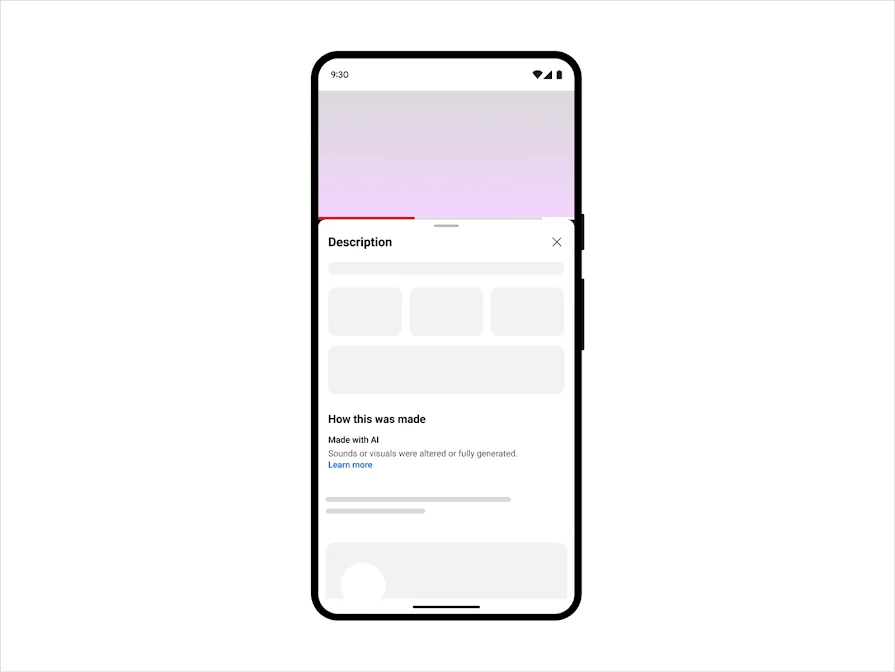
YouTube's help page on disclosing altered or synthetic content, as retrieved on 16 September 2026, states that creators must disclose “content that is generated or meaningfully altered with AI when it appears realistic,” and explicitly lists “AI generated music” among the examples requiring disclosure, alongside realistic AI-generated video and altered footage of real people or places. The page describes the mechanism as an upload-time toggle: in YouTube Studio's Attributes section, creators select “Yes” under “AI use” if the content meets the disclosure requirements. It states “creators who consistently choose not to disclose this information may be subject to manual application of a label, or penalties from YouTube, including removal of content or suspension from the YouTube Partner Program,” and lists exemptions such as “beauty filters,” color adjustment, and script generation. YouTube's original announcement blog post, published 18 March 2024 and updated 26 March 2025, describes the same tool as one that “will require creators to disclose to viewers when realistic content is made with altered or synthetic media, including generative AI.”
Rights status
This page describes a platform disclosure workflow enforced through YouTube's own content and Partner Program policies, not a copyright or ownership determination. YouTube states what triggers the requirement and what happens if a creator declines to disclose realistic AI content, including possible removal or Partner Program suspension, but neither cited document addresses who owns rights to the underlying AI-generated music itself.
What to check before you use it
This is an editorial checklist. Before uploading a video with AI-generated or AI-altered music: use the “AI use” toggle in YouTube Studio's Attributes section rather than assuming a caption or description note suffices, since the page describes a specific dedicated control; confirm whether the music qualifies as “realistic,” since the exemption list suggests minor or clearly synthetic-sounding content may fall outside the requirement; and treat repeated non-disclosure as a Partner Program risk, since the page names suspension as a stated consequence.
- Does the AI-generated or AI-altered music in this upload sound realistic enough to trigger disclosure as the page defines it?
- Has the “AI use” attribute actually been set correctly during this specific upload?
- Would repeated omissions on a channel's past uploads put its Partner Program status at risk under this policy?
The workflow YouTube describes puts the disclosure decision directly in the uploader's hands at the point of publishing, making it as much a checklist item for a release as a policy to interpret after the fact.
Sources & reading trail
States that AI-generated music must be disclosed via the 'AI use' upload toggle and the possible consequences of not disclosing.
Source published: Not established · Retrieved: 16 September 2026
Original announcement of the disclosure tool for realistic altered or synthetic media, including generative AI.
Source published: 18 March 2024 · Retrieved: 16 September 2026
Documentation, licences and platform policies establish the note; the what-to-check reading is Music Tech Field Notes editorial analysis. This retrospective draft does not imply the site published on the event date.