The audio task
A listener scrolling past an artist page, or a producer deciding whether to follow a project, is often asking a narrower question than whether AI was used on a record: is the person behind this profile real? Spotify's own newsroom post treats that as distinct from how a track was written, sung, or produced, and builds a labeling feature around identity rather than folding it into existing AI-disclosure tools.
What the documents show
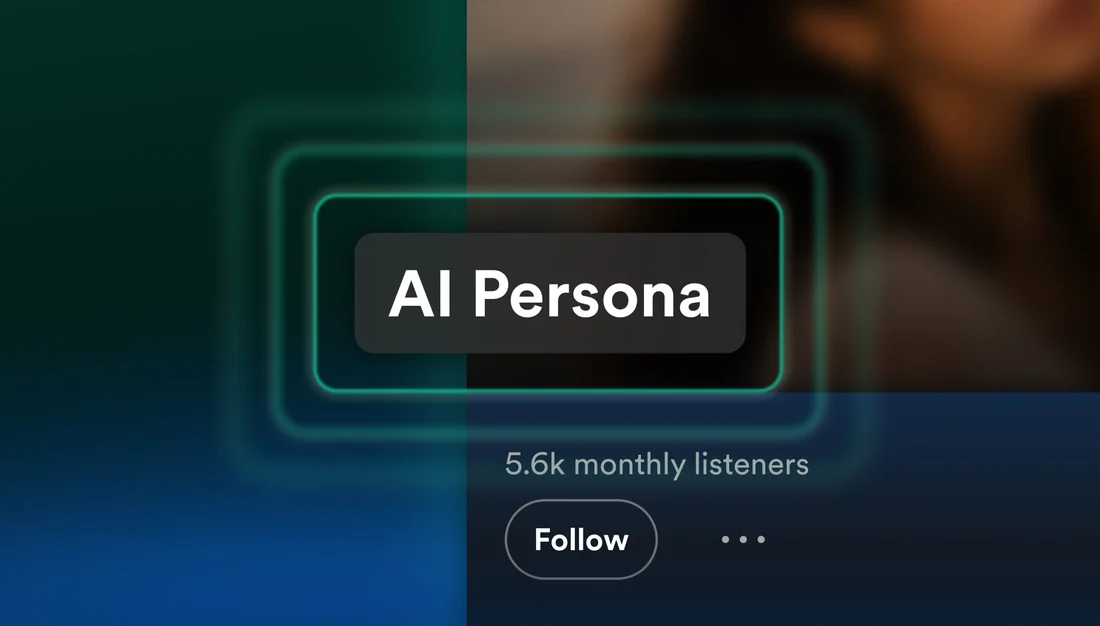
Spotify's 11 August 2026 announcement states that, starting in mid-September, an AI Persona badge will appear on some artist profiles, in search results, and on track rows in playlists. The post says the badge “signals to listeners that an artist's identity may be AI-generated and does not represent a real person,” and that it is applied two ways: an artist can self-disclose an AI Persona status through Spotify for Artists, or Spotify's review team can apply the badge after identifying profiles whose “public identity...appears to represent photorealistic AI-generated identities,” starting with profiles meeting unspecified audience thresholds. Badged artists “will be notified and given the opportunity to self-disclose or appeal.” A separate support article on AI credits confirms the badge is a different system from AI Credits, which let an artist mark specific roles such as lyrics or production as AI-generated per track; that article states AI credits are “optional” and “currently in beta.” Neither document defines a verification method beyond the example language about photorealistic profiles, or gives an appeals timeline.
Rights status
The newsroom post frames the badge as a transparency and platform-programming decision, not a rights determination. It states that, “by default,” Spotify “will not include AI Personas in any editorial or algorithmic recommendations,” meaning a badged profile is demoted from default discovery surfaces rather than removed from the catalogue. Neither the announcement nor the AI credits article mentions royalty eligibility or payout mechanics, and nothing in either cited text ties the badge to a copyright, distribution, or licensing status. Read narrowly, this is a disclosure and discovery control that Spotify built and can change, not evidence of a legal finding about who owns or performed a recording.
What to check before you use it
This is an editorial checklist, not guidance from Spotify. Before treating a badge as informative for a release strategy: confirm whether the profile already carries a related disclosure, such as an AI credit, since the two systems are described as separate; check Spotify for Artists directly for the current self-disclosure option rather than assuming it matches this description months later; and do not assume a badge, or its absence, affects royalty payment, since both cited sources are silent on that point.
- Does this artist profile already carry a self-disclosed AI Persona status, an AI credit, or neither?
- Has Spotify published an update since 11 August 2026 changing how badges are applied or appealed?
- Does any distribution agreement tied to this artist reference platform identity labels at all?
The badge is a young feature on a stated rolling timeline, so its practical effect on discovery and listener trust is still being built out rather than settled.
Sources & reading trail
States what the AI Persona badge signals, how it is applied via self-disclosure and review, and that badged profiles are excluded from default recommendations.
Source published: 11 August 2026 · Retrieved: 16 September 2026
Confirms AI credits are an optional, beta, per-role disclosure system distinct from the AI Persona badge.
Source published: Not established · Retrieved: 16 September 2026
Documentation, licences and platform policies establish the note; the what-to-check reading is Music Tech Field Notes editorial analysis. This retrospective draft does not imply the site published on the event date.