The audio task
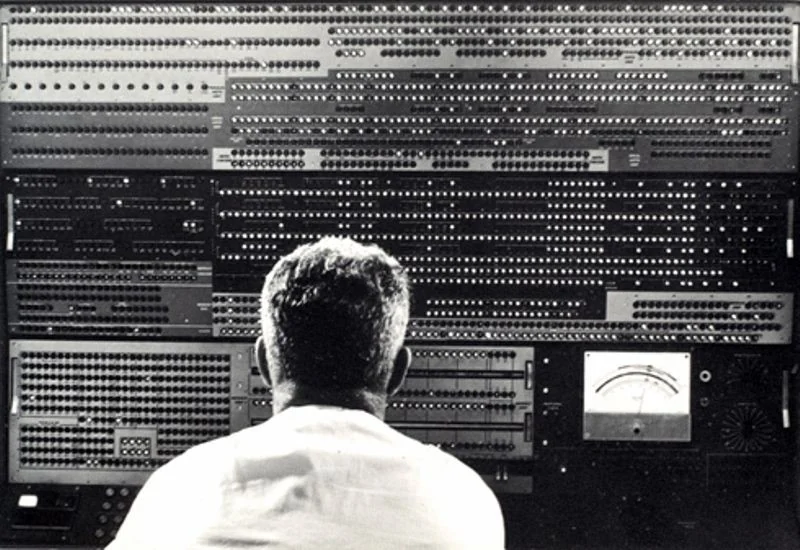
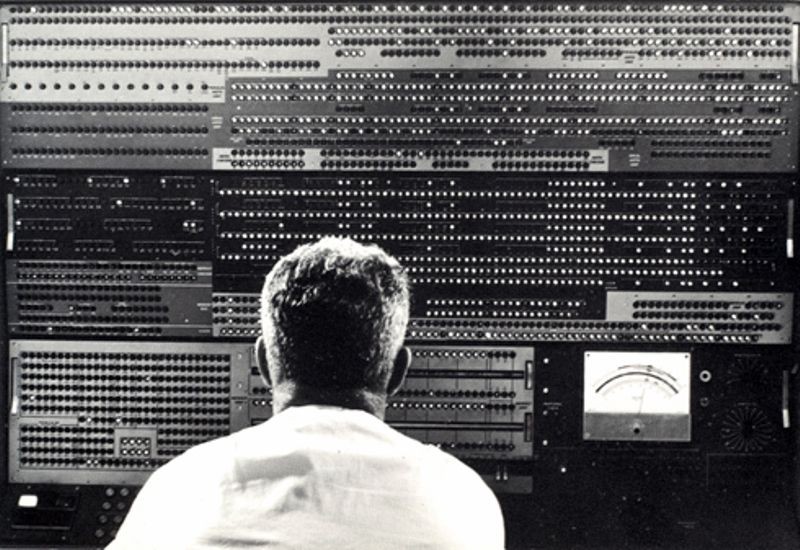
Long before anyone asked a plugin to hold a note, researchers were asking a different question: could a computer make a sound a listener would recognize as singing at all. In 1961, engineers at Bell Labs were not trying to replace a vocalist; they were testing whether a mainframe built for telephone-network research could reproduce the timing, pitch and words of a simple song using speech synthesis instead of a recorded human voice.
What the documents show
The Computer History Museum's own 1961 timeline entry states that Bell Labs had built a speech synthesis system for its IBM 704 mainframe, and that John Kelly and Carol Lochbaum programmed the vocal line while Max Mathews programmed the musical accompaniment, producing a rendition of Daisy Bell. The museum's Popular Culture category page repeats the same account. Both list the demonstration's most consequential audience member as author Arthur C. Clarke, who recommended it to director Stanley Kubrick, and note that the sound reappears as HAL 9000's dying song in the 1968 film 2001: A Space Odyssey. Neither museum page dates the demonstration more precisely than the year, and neither describes the underlying synthesis method as a forerunner of any specific product sold today.
Rights status
Neither source addresses rights at all, because none existed yet to address: the IBM 704 demonstration predates the WIPO Performances and Phonograms Treaty by thirty-five years and predates any statute recognizing a performer's interest in a synthesized voice. That absence is itself informative for a rights-aware reader. The demonstration used a melody already decades old and involved no performer whose likeness or voice was being modeled; it is a landmark in synthesis capability, not a precedent for consent or licensing.
What to check before you use it
This is an editorial checklist, not legal guidance. Before citing this event as the origin of a modern tool, verify that a vendor's own history page, rather than a press summary, actually connects its technology to this lineage. Confirm whether a claimed connection is architectural, the same synthesis principle, or purely narrative, an evocative nod to a famous demo. And check whether a modern vocal-synthesis product's marketing borrows the emotional resonance of this story without disclosing how differently it is built, trained and licensed.
- Does a vendor's history page name a specific technical lineage, or only an evocative reference?
- What does the cited museum or archive page actually date, and what does it leave undated?
- Is a synthesized-voice product being marketed with a historical association it cannot document?
The 1961 demonstration remains useful precisely because it is modest: a museum's timeline entry, not a manifesto. Reading it that way protects the historical record from being pressed into service as evidence for whatever a rights or technology debate needs it to say today.
Sources & reading trail
States Bell Labs' IBM 704 speech synthesis system, programmed by John Kelly and Carol Lochbaum for vocals and Max Mathews for accompaniment, produced Daisy Bell, and that Arthur C. Clarke attended and recommended it to Stanley Kubrick.
Source published: Not established · Retrieved: 16 September 2026
Corroborates the same account of the IBM 704 demonstration under the museum's Popular Culture timeline category.
Source published: Not established · Retrieved: 16 September 2026
Documentation, licences and platform policies establish the note; the what-to-check reading is Music Tech Field Notes editorial analysis. This retrospective draft does not imply the site published on the event date.